
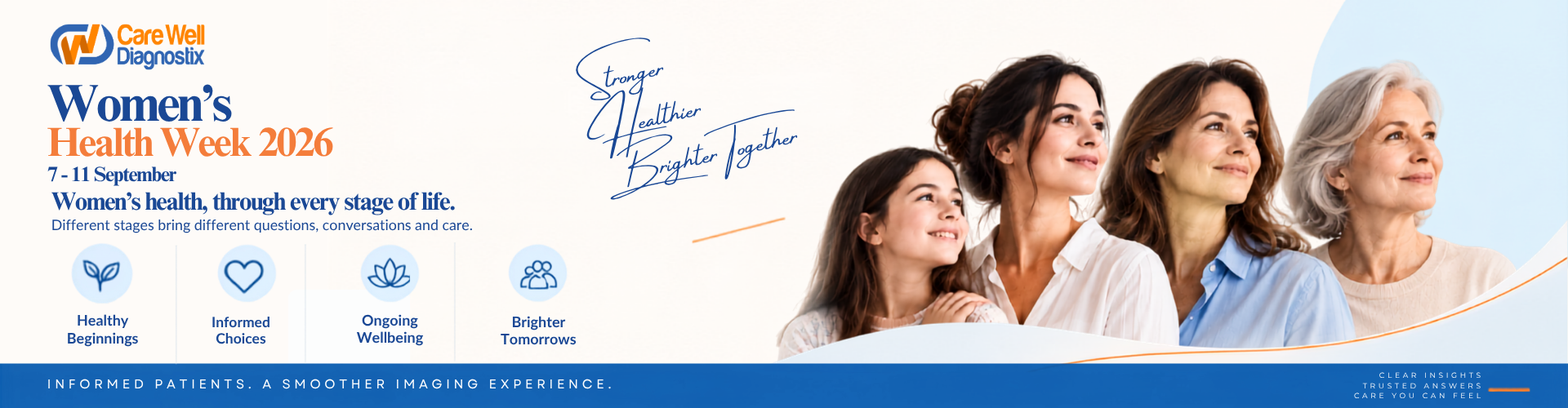
Women’s Health Week 2026: Small Steps for Health, Through Every Stage of Life
From 7–11 September 2026, Women’s Health Week is an opportunity to make space for conversations about health, wellbeing and the small, practical steps that can support women through every stage of life.

Women’s Health Week runs from 7–11 September 2026 across Australia. Led by Jean Hailes for Women’s Health, this year’s theme, “Do it anyway”, encourages realistic, achievable steps towards better health — whether that means asking a question, making a healthcare appointment, moving your body, prioritising rest, seeking support or simply paying closer attention to how you feel.
Women’s health is not limited to one age, condition or area of the body. It includes physical health, mental wellbeing, reproductive and pelvic health, pregnancy, menopause, bone health, heart health, healthy ageing and access to appropriate healthcare when concerns arise.
What Is Women’s Health Week 2026?
Women’s Health Week is an annual Australian health initiative dedicated to improving awareness, conversations and access to reliable information about the health and wellbeing of women, girls and gender-diverse people.
The week is led by Jean Hailes for Women’s Health and in 2026 takes place from 7 to 11 September.
Rather than expecting people to make dramatic lifestyle changes, the 2026 theme “Do it anyway” focuses on taking manageable steps for your health, in ways that work for your own life and circumstances.
Listen to Your Body
Notice changes that are new, persistent or affecting your daily life rather than automatically assuming they are something you simply have to live with.
Ask the Question
If something about your health is unclear, asking your GP or another qualified healthcare professional can be an important first step.
Keep Up With Health Checks
Health checks and screening recommendations vary according to age, health history and individual risk factors. Your healthcare professional can advise what is appropriate for you.
Follow Up When Needed
If symptoms continue, change or concern you, consider discussing them again rather than assuming that no further assessment is needed.
Support Mental Wellbeing
Mental and physical health are closely connected. Seeking appropriate support for stress, anxiety, low mood or other concerns is part of looking after your health.
Take Small, Sustainable Steps
Health does not have to be approached perfectly. Small actions that are realistic for your circumstances can still matter.
Why Women’s Health Week Matters
Women’s health can change significantly across different stages of life. Periods, fertility, pregnancy, pelvic health, menopause, bone health, heart health, mental wellbeing and healthy ageing can all bring different questions at different times.
At the same time, work, caring responsibilities, family commitments and everyday life can make it easy for personal health concerns to be pushed further down the list.
Women’s Health Week creates a dedicated opportunity to bring those concerns back into focus — not through fear or pressure, but through better information, practical conversations and healthcare that responds to individual needs.
What matters at 20 may look very different from what matters during pregnancy, midlife, menopause or later adulthood. Good healthcare recognises those changing needs and considers each person’s symptoms, history, circumstances and clinical risks.
What Does the 2026 Theme “Do It Anyway” Mean?
The 2026 Women’s Health Week theme is not about ignoring pain, pushing through illness or expecting women to do more when they are already overwhelmed.
Instead, it is about giving yourself permission to take a step towards your health, even when life is busy or circumstances are not perfect.
That small step might be:
- booking an overdue appointment with your GP
- asking about a symptom you have been putting off discussing
- checking whether you are up to date with recommended health checks
- asking another question when you do not understand your healthcare plan
- resting when your body needs rest
- moving in a way that feels manageable for you
- talking to someone about your mental wellbeing
- following up when a health concern has not improved
The goal is not perfection. It is to make health feel possible, personal and worth prioritising.
Five Days, Five Ways to Think About Your Health
The official 2026 Women’s Health Week program explores five practical areas of wellbeing: to fuel, to move, to rest, to breathe and to connect. Together, they reinforce the idea that health is shaped by more than medical appointments alone.
Day 1 — To Fuel
Nutrition does not need to be perfect to support health. Regular, balanced eating patterns and access to appropriate nutrition advice can form part of long-term wellbeing.
Day 2 — To Move
Physical activity can take many forms. The right type and amount of movement depend on your health, ability, circumstances and medical advice where relevant.
Day 3 — To Rest
Rest and sleep are important parts of health. Pain, pregnancy, caring responsibilities, stress and perimenopause can all affect sleep and may be worth discussing if problems become persistent.
Day 4 — To Breathe
Mental wellbeing deserves the same consideration as physical health. Support is available when stress, anxiety, low mood or emotional concerns begin affecting everyday life.
Day 5 — To Connect
Supportive relationships and connection with family, friends, community and healthcare professionals can form an important part of wellbeing.
Beyond the Week
Women’s Health Week lasts five days, but looking after your health is ongoing. Consider choosing one realistic action you can continue after the week finishes.
Women’s Health Through Different Stages of Life
Health needs are not static. Different stages of life can bring different symptoms, questions, risk factors and healthcare priorities.
Age, medical history, pregnancy history, genetics, lifestyle, medications and many other factors can influence what healthcare may be appropriate for an individual.
Adolescence and Young Adulthood
Early health conversations may include menstrual health, pelvic pain, sexual and reproductive health, nutrition, mental wellbeing and establishing healthy routines.
Reproductive Years
Health concerns may include menstrual symptoms, fertility, contraception, pelvic pain, endometriosis, pregnancy planning and other reproductive or general health issues.
Pregnancy and After Birth
Pregnancy introduces new physical and emotional changes. Antenatal care, clinically appropriate pregnancy imaging, postnatal support and conversations about new or concerning symptoms can all form part of care during this stage.
Perimenopause and Menopause
Changes in periods, sleep, mood, temperature regulation, sexual health and bone health may occur around menopause. Symptoms vary between individuals, and concerns can be discussed with a qualified healthcare professional.
Healthy Ageing
As women age, conversations may increasingly include bone health, cardiovascular health, mobility, memory, bladder and bowel health, nutrition, medicines and maintaining independence and quality of life.
Health Changes Worth Discussing With a Healthcare Professional
Many symptoms have several possible causes, and experiencing a symptom does not automatically mean that something serious is wrong. However, new, persistent, worsening or unexplained changes are worth discussing with an appropriately qualified healthcare professional.
| Health Concern | Examples of Changes You May Want to Discuss |
|---|---|
| Menstrual & Pelvic Health | Persistent pelvic pain, changes in periods, unusually heavy bleeding or symptoms that significantly affect daily activities. |
| Pregnancy | Concerns about symptoms during pregnancy or questions about recommended antenatal care and imaging. |
| Menopause | Symptoms such as troublesome hot flushes, sleep disturbance, mood changes or other changes affecting wellbeing. |
| Bone Health | Questions about osteoporosis risk, previous fractures or whether bone density assessment may be appropriate. |
| General Health | Persistent pain, unexplained physical changes or symptoms that are new, worsening or affecting daily life. |
This list is general information only. Symptoms cannot be diagnosed from a list. A healthcare professional can assess your individual circumstances and advise whether examination, testing, imaging or another form of care is appropriate.
What Role Can Diagnostic Imaging Play in Women’s Healthcare?
Diagnostic imaging can be one part of a broader healthcare assessment. Depending on symptoms, medical history and the clinical question being investigated, a referring healthcare professional may recommend imaging to help examine particular areas of the body.
Imaging should not be viewed as a test that every woman needs simply because of age or gender. The appropriate examination depends on the individual clinical situation.
At CareWell Diagnostix, diagnostic imaging services include General X-Ray , ultrasound, CT, DEXA bone density assessment, liver elastography and selected ultrasound-guided procedures.
Your referring doctor or healthcare professional can determine whether imaging is appropriate and which examination is best suited to the information they need.
Ultrasound and Women’s Health
Ultrasound uses high-frequency sound waves to produce real-time images of structures inside the body. It does not use ionising radiation.
In women’s healthcare, ultrasound may be requested for a range of clinical reasons, including assessment of pelvic symptoms, selected abdominal concerns and pregnancy imaging.
The type of ultrasound recommended depends on the clinical question. Preparation may also differ between examinations, so patients should follow the instructions provided by their imaging provider.
If you have been referred for ultrasound, you can learn more about Ultrasound at CareWell Diagnostix .
CT Imaging and Women’s Health
CT uses X-rays and computer processing to create detailed cross-sectional images of the body.
A healthcare professional may request CT when detailed imaging is clinically appropriate for a particular symptom, injury or health concern.
Some CT examinations may involve contrast material or specific preparation. The need for contrast, and the most appropriate imaging approach, depends on the examination and individual circumstances.
Patients referred for CT can review CareWell's CT Scan information before their appointment.
Bone Health, Menopause and DEXA
Bone health becomes increasingly important as women move through midlife and older age. Changes in hormone levels around menopause are one of several factors that can influence bone health.
A DEXA or DXA scan measures bone mineral density and may be recommended when a healthcare professional wants to assess bone health or osteoporosis risk.
Not everyone needs a DEXA scan at the same age. Whether it is appropriate depends on individual risk factors, medical history and clinical guidance.
Learn more about DEXA Bone Density Scanning at CareWell Diagnostix .
Women’s Health Is More Than Reproductive Health
Discussions about women’s health often focus on periods, fertility, pregnancy and menopause, but women’s health extends much further.
Heart health, liver health, bone health, metabolic health, mental wellbeing, sleep, nutrition, mobility and healthy ageing are all important parts of long-term health.
This broader view matters because health conditions can affect women differently across different life stages, and symptoms should be considered in the context of the whole person rather than one area of health alone.
When clinically indicated, services such as Liver Elastography may form part of the assessment of specific health concerns following an appropriate referral.
What If You Feel Your Health Concern Has Not Been Resolved?
Health concerns are not always explained in a single appointment. Some symptoms change over time, and additional clinical information may be needed before the next step becomes clear.
If symptoms continue, become worse or significantly affect your quality of life, consider discussing them again with your healthcare professional.
It can help to explain when symptoms started, whether they are changing, what makes them better or worse, and how they affect your usual activities.
Your healthcare professional can then consider whether further assessment, follow-up, referral, pathology, imaging or another approach is appropriate.
If you do not understand why an examination has been recommended, what a result means or what happens next, it is reasonable to ask for clarification.
Small Health Steps You Can Take During Women’s Health Week
Looking after your health does not have to begin with a major change. Women’s Health Week can simply be a prompt to complete one health task you have been putting off.
You might choose to:
- book an appointment to discuss an ongoing symptom
- check whether you are due for recommended health checks
- write down questions before your next healthcare appointment
- review medicines with your healthcare professional where appropriate
- make time for movement that suits your circumstances
- prioritise rest or address persistent sleep concerns
- seek support for mental or emotional wellbeing
- follow up a referral or investigation you have been meaning to organise
A small action completed is often more realistic than waiting for the perfect time to overhaul every part of your health.
Why Women’s Healthcare Should Be Individualised
Health recommendations are not identical for every woman. Appropriate care depends on the person, their stage of life, symptoms and clinical circumstances.
Age and Life Stage
Health priorities can change from adolescence and reproductive years through pregnancy, menopause and healthy ageing.
Symptoms
New, persistent or worsening symptoms may require an individual clinical assessment rather than a one-size-fits-all approach.
Medical and Family History
Previous conditions, medicines, family history and individual risk factors may influence healthcare recommendations.
Clinical Need
Tests and imaging should be selected according to the clinical question rather than performed routinely without a clear reason.
10 Questions to Help Start a Women’s Health Conversation
If Women’s Health Week has prompted you to think about your own health, these questions may help you prepare for a conversation with your healthcare professional:
- Are there any health checks that may be appropriate for me at my age and stage of life?
- Is this symptom something I should have assessed?
- Could my periods, pelvic symptoms or menopause symptoms be worth discussing further?
- Are there changes in my medical or family history that I should mention?
- What can I do to support my bone health as I get older?
- Could any of my medicines or health conditions affect the symptoms I am experiencing?
- Do I need any tests or imaging, and what clinical question would they help answer?
- If imaging is recommended, what type of examination am I being referred for?
- What should I do if my symptoms continue or change?
- When should I arrange follow-up?
You do not need to ask every question at once. Choose the ones that are most relevant to what you are experiencing.
Supporting Women’s Diagnostic Imaging at CareWell Diagnostix
CareWell Diagnostix provides diagnostic imaging services for patients in Tarneit and Melbourne's West.
When imaging has been recommended by a referring healthcare professional, available CareWell services include:
Ultrasound
Real-time imaging using sound waves, with examinations available for a range of clinical indications including selected women’s health and pregnancy referrals.
Explore UltrasoundCT Scan
Detailed cross-sectional imaging that may be requested for a range of clinical questions when appropriate.
Explore CT ScanGeneral X-Ray
X-ray imaging used to assess a range of conditions and injuries when requested by a healthcare professional.
Explore General X-RayDEXA Bone Density
Bone mineral density assessment that may be recommended when clinically appropriate, including for the assessment of osteoporosis risk.
Explore DEXALiver Elastography
Non-invasive assessment of liver stiffness for selected clinical indications.
Explore Liver ElastographyUltrasound-Guided Procedures
Selected procedures performed with real-time ultrasound guidance when clinically appropriate.
Explore Guided ProceduresWomen’s Health and Diagnostic Imaging in Tarneit & Melbourne West
Women across Tarneit and Melbourne West may require diagnostic imaging at different stages of life for many different clinical reasons.
CareWell Diagnostix is located at 205 Bethany Road, Tarneit VIC 3029 and supports patients from Tarneit and surrounding Melbourne West communities including Werribee, Hoppers Crossing, Point Cook, Truganina, Wyndham Vale, Manor Lakes and Williams Landing.
If your GP, specialist or other referring healthcare professional has recommended diagnostic imaging, the CareWell team can provide information about the relevant examination, booking requirements and preparation.
Women’s Health Week is also a useful reminder that looking after health does not end on 11 September. Continue asking questions, attending appropriate healthcare appointments and seeking advice when something does not feel right for you.
Related CareWell Patient Guides
How to Book Diagnostic Imaging in Tarneit & Melbourne West
Learn about referrals, booking, preparation and what to bring to your imaging appointment.
Read the Patient GuideWhat Happens During a Diagnostic Imaging Appointment?
Learn what to expect from check-in and preparation through to the examination and imaging report.
Related article coming soon.What Is Women’s Imaging and Which Examinations Does It Include?
Explore how different imaging examinations may support women’s healthcare when clinically appropriate.
Related article coming soon.Frequently Asked Questions
When is Women’s Health Week 2026?
Women’s Health Week 2026 runs from Monday 7 September to Friday 11 September across Australia.
Who organises Women’s Health Week in Australia?
Women’s Health Week is led by Jean Hailes for Women’s Health, a national not-for-profit organisation focused on improving women’s health and wellbeing.
What is the Women’s Health Week 2026 theme?
The 2026 theme is “Do it anyway”. It encourages people to take small, realistic steps towards their health in ways that work for their own circumstances, rather than waiting for perfect conditions.
What are the five focus areas for Women’s Health Week 2026?
The five daily themes are To Fuel, To Move, To Rest, To Breathe and To Connect, covering practical aspects of physical, mental and social wellbeing.
Is Women’s Health Week only about reproductive health?
No. Women’s health includes reproductive and pelvic health, but also encompasses mental wellbeing, heart health, bone health, sleep, nutrition, chronic disease, healthy ageing and many other areas.
When should I speak to a healthcare professional about a symptom?
Consider seeking healthcare advice when a symptom is new, persistent, worsening, unexplained or affecting your normal activities. Urgent or severe symptoms should be assessed promptly through an appropriate healthcare service.
Does every women’s health concern require imaging?
No. Imaging is only one part of healthcare assessment. Whether an imaging examination is appropriate depends on symptoms, history, examination findings and the clinical question being investigated.
How is ultrasound used in women’s health?
Ultrasound may be requested for selected pelvic, abdominal, pregnancy and other clinical indications. The appropriate type of ultrasound depends on the reason for the referral.
Does ultrasound use radiation?
No. Diagnostic ultrasound uses high-frequency sound waves to create images and does not use ionising radiation.
What is a DEXA scan used for?
A DEXA or DXA scan measures bone mineral density. It may be recommended to help assess bone health or osteoporosis risk based on an individual’s clinical circumstances.
Why is bone health important for women around menopause?
Hormonal changes around menopause can contribute to changes in bone density. However, osteoporosis risk depends on multiple factors, so individual assessment by a healthcare professional is important.
Where is CareWell Diagnostix located?
CareWell Diagnostix has a clinic at 205 Bethany Road, Tarneit VIC 3029 and supports patients from Tarneit and surrounding Melbourne West communities.
What diagnostic imaging services are available at CareWell Diagnostix?
CareWell Diagnostix provides CT, ultrasound, general X-ray, DEXA bone density scanning, liver elastography and selected ultrasound-guided procedures. The examination you need depends on your referral and clinical circumstances.
Key Takeaways
- Women’s Health Week 2026 runs from 7–11 September.
- This year’s theme, “Do it anyway”, encourages small and realistic steps towards better health.
- The five daily focus areas are To Fuel, To Move, To Rest, To Breathe and To Connect.
- Women’s health extends across the whole life course — from menstrual and reproductive health to pregnancy, menopause, bone health, mental wellbeing and healthy ageing.
- New, persistent, worsening or unexplained symptoms are worth discussing with a qualified healthcare professional.
- Diagnostic imaging can support clinical assessment when it is appropriate for the symptoms and clinical question being investigated.
- Not every health concern requires imaging, and the most appropriate examination should be determined according to individual clinical needs.
- Looking after your health does not require perfection. One small, achievable step can be a useful place to begin.
Supporting Women’s Health Through Every Stage of Life
Women’s Health Week is a reminder to make space for the questions, conversations and healthcare that matter to you.
If your GP, specialist or other healthcare professional has referred you for diagnostic imaging, CareWell Diagnostix provides a range of imaging services for patients in Tarneit and Melbourne West.
Make an AppointmentThis article is provided for general educational purposes only and does not replace individual medical advice, diagnosis or treatment from a qualified healthcare professional. Health checks, investigations and diagnostic imaging requirements vary according to age, symptoms, medical history, risk factors and individual clinical circumstances. If you have concerns about your health, speak with your GP or another appropriately qualified healthcare professional. Always follow the instructions provided by your referring healthcare professional and imaging provider.